"The application process" will, naturally, involve some reading on your part - two novels and an article - to be discussed together with one or more of the other applicants and me. We'll talk about the programme, your thoughts, questions, preferences, hesitations etc. Get in touch - robin@theutopiaworkshop.co.uk / 07974 331 053
1. Here are a list of novels that can be borrowed for a two-way discussion on the same book. I'll highlight in green when one has been chosen, and preferably the next person will opt for that.
3. A choice of articles
In this article ... Ginzburg is centrally concerned with how people see the world, how knowledge is acquired and organised, the frameworks into which they fit information, beliefs, or observations, and the social structure which contains, influences and is influenced by these aspects of knowledge. He examines the relationship between formal' and 'informal' knowledge, 'high' and 'low', lore and science. His concern, in short, is historical epistemology -the history and theory of the construction of knowledge.
Published in the History Workshop Journal, March 1980
‘In politics people think they know what they want, and in psychoanalysis the assumption is that they don’t know.’ In this fluid and penetrating dialogue, psychoanalyst Adam Phillips and literary scholar Devorah Baum explore the porous boundary between private suffering and public life, tracking how systemic political anxieties and economic pressures inevitably saturate the therapeutic encounter. Phillips and Baum reject the conventional view of therapy as a tool for merely adjusting individuals to the status quo. Instead, they reframe the clinical space as a vital sanctuary for resistance. They examine how modern political life demands absolute certainty and ideological conformity, contrasting this rigidity with the psychoanalytic room—a unique laboratory where individuals are given the rare freedom to be messy, ambivalent, and contradictory. By treating the dialogue between analyst and patient as an improvisational performance rather than a search for a fixed, historic truth, the conversation demonstrates how learning to listen to our own inner conflicts can become a radical, democratic act, offering a crucial vocabulary for anyone seeking to break free from institutional scripts and reclaim the capacity for genuine collective play.
Granta 146, 14th February 2019
"Anger is the 'forgotten' passion of psychoanalysis. Or more accurately, it is the 'translated' passion, the emotion that is almost immediately converted into the more stable—and more manageable—categories of aggression, hostility, or hate.
Originally published in Freud and the Passions, edited by John O'Neill (1996)
Roger Caillois (1913–1978), polymath, aesthetic philosopher, historian of science, and social analyst of ritual and belief, was friends with André Breton and a fellow Surrealist; but in 1934 they parted over the Surrealist commitment to mystery for its own sake. In this essay, Marina Warner explores his late-career obsession, focusing on his profound, poetic relationship with the mineral kingdom. Warner traces how Caillois turned away from the structural rigidities of modern logic to immerse himself in the natural patterns found within polished agates, jaspers, and meteorites.
She examines his concept of a logique de l'imaginaire—a logic of the imagination—which suggests that the shapes, lines, and geometries etched into stones are not random geological accidents. Instead, they represent a universal, foundational syntax of nature that actually precedes human consciousness. Warner illuminates the shift in perspective this requires: rather than humans arrogantly projecting their own aesthetic ideals onto the passive canvas of nature, the earth itself has already archived every archetype, script, and artistic impulse deep within its crust. Human imagination, in this light, is not an isolated engine of pure invention, but a responsive organ that mirrors and decodes the pre-existing imagery of the cosmos.
Article in Cabinet magazine, issue 29, Spring 2008
The essay opens by challenging the "dog-eared copies of The Origins of Totalitarianism" currently being dusted off by activists: "Among the many lessons of Trump’s return to the White House, a crucial one concerns civil society: a mushy and frustrating, but nevertheless inescapable, concept."
New Left Review, Sidecar, 03 October 2025
Part of a broader project exploring the relationships between creators and their doctors, this piece reconstructs the final months of Van Gogh's life in Auvers-sur-Oise. It examines the deep, complicated, and agonizing psychological mirror between the unravelling painter and the melancholic physician who was supposed to treat him.
Fortnighthly Review January 2018
"Late in 2016, Molly Worthen lauded the great books idea as an antidote to liberalism’s ills in the Age of Trump. In “Can I Go to Great Books Camp?” Worthen notes that studying the history of ideas is always connected to great books. One assumption of Worthen’s, which I endorse, is that intellectual traditions matter for movement building and identity formation. Studying those traditions makes liberalism, or the Left, more than a mere anti-Right movement. I read her piece enthusiastically and, initially, wanted to promote it. But I couldn’t. Indeed, after considerable reflection it irked me. Why?..."
Public Seminar, April 2017
A speech given by VW in 1931 to a conference on the employment of women where she speaks about the barriers, beyond the material ones, facing women as they approach page.
"There is a surprising confluence in the philosopher Deleuze, the psychoanalyst Bion, and phenomenological psychologist Gendlin on what Deleuze terms the immediate “sense” of understanding and Gendlin calls “felt meaning.” Beneath its more differentiated propositional articulations, all three understand this phenomenon as a felt sense of constantly shifting coherence and incoherence, and based in often tacit metaphoric, figural, and/or synesthetic processes. For Deleuze and Bion, in particular, psychotic thought disorder is understood as the exaggeration of this incoherence potential within all felt meaning. Correspondingly, the expansion or enhancement of the felt coherence aspect of ordinary thought becomes the basis for the mystical states of consciousness that become a major concern of the later Bion and Deleuze. The Indian spiritual teacher Krishnamurti, known for his use of an ordinary language of deceptive simplicity to describe spiritual enlightenment, offers a striking confirmation of Deleuze and Bion on numinous states as latent within all felt meaning...."
- Good Aristocrats / Bad Aristocrats: Thomas Hobbes and Early Modern Political Culture, Michael Walzer
"... Good aristocrats are very few in number. The bulk of mankind, matter rather than makers, Hobbes divides into two groups, best described, I think, in his brief justification of preventative war: “there be some, that taking pleasure in contemplating their own power in the acts of conquest, which they pursue farther than their own security requires; if others, that otherwise, would be glad to be at ease within modest bounds, should not by invasion increase their power, they would not be able, long time, by standing only on their defense, to subsist”. This suggests that the “general inclination of all mankind, a perpetual and restless desire of power after power, that ceaseth only in death” has a twofold psychological origin. For what I take to be the larger number of men and women, the inclination arises out of fear. These people are not by nature competitive. Left to themselves, their aversion to risk would consistently outweigh their appetite for power, and they would rest content within the modest bounds of their families and their possessions. But they are forced into the war of all against all by a smaller group of people who pursue power, not as an instrumental good, but for its own sake. This second group competes simply for the sake of winning, and it is to its own members above all that Hobbes’ famous account of life as a race applies: we are to conceive of them as having “no other goal, no other garland, but being foremost”
- One Writer's Beginnings - Eudora Welty
One Writer's Beginnings is a chapter from the book of the same title, which Welty originally presented at Harvard University in 1983 as a series of lectures about the people and events that have influenced her literary life. This first chapter recounts her childhood initiation in books and words in the family home.
- Hebraism and Hellenism - Milton Himmelfarb
In this 1969 (meandering) essay Milton Himmelfarb uses the centenary of Matthew Arnold’s Culture and Anarchy to re-examine the historical tension between Jewish Hebraism and Western Hellenism. Himmelfarb argues that rather than adopting Arnold's balanced and rational view of Hellenism, modern secular society abandoned traditional morality for a chaotic, Dionysian paganism, underscoring the enduring necessity of Hebraic ethics.
- Was the Eighteenth Century Long Only in England? - Joan Dejean
A 2001 essay written by the renowned scholar of French literature, Joan DeJean, published in the journal Eighteenth-Century Fiction, looking at how literary historians frame and periodise time. Her title plays on a famous concept in British history called "the long 18th century"—the widely accepted academic idea that the "spirit" of the 1700s actually stretched from roughly 1688 (the Glorious Revolution) to 1832 (the Reform Act). DeJean's essay uses this concept to critique how differently the literary histories of England and France are treated.
- The Introduction to 'Tragedy and Enlightenment: Athenian Political Thought and the Dilemmas of Modernity' - Christopher Rocco (around 25 pages + footnotes)
Margo Collins' review in Comparative Drama journal serves as a teaser: This book is an exercise in "conceptual displacement," the mapping of Greek concepts onto modern contexts. Its aim is to allow us to see our society with fresh eyes, and Rocco aligns this enterprise with that of ancient tragedy, which also, on his reading, used the past to interrogate the present. Rocco's method is to present four "staged" encounters with classical texts as a way of examining the nature and value of the Enlightenment. The theater for the book is thus the Western tradition from antiquity to the present, the drama is intellectual, and the audience is those currently struggling with the "dilemmas of modernity." Ancient drama is but one (crucial) forum in which these dilemmas are played out, although it turns out that important analytic tools are those first employed by Aristotle in his ground-breaking examination of tragedy: recognition and reversal.
The introduction sets up the framework that will structure the whole. Rocco connects recent debate over the importance of Classics and the ancient world with the postmodern debate over the legacy of the Enlightenment. Precisely how should the past be interpreted and challenged? The protagonists in this controversy are Habermas and Foucault. The former, espousing the goals of enlightened reason, hopes that an ideal speech community can separate language's implication with power, while the latter declares that enlightenment and rationality are coercive, hegemonic discourses that must be subverted and subjected to genealogical critique.
Rocco's enterprise is not to choose one position over the other but to use tragic poetry and philosophical dialogue to think through this opposition in tension. His study is not content with either regulative reason codified as disciplinary norm or the endless subversion of all normative codes. Because his interest is the present, Rocco thinks that "Greek tragedy and philosophical dialogue contribute most towards theorizing the present when their disturbing content is wrenched out of its original context and appropriated to disrupt the established norms and forms of democratically constituted selves and societies, even as they provide a democratic identity and practice against which to struggle". He explicitly disavows, therefore, any interest in ancient context or authorial intention.
In this edited excerpt from The Lives of Michel Foucault, David Macey views Foucault's life through his thought on desire, S&M and new forms of sexual practice in '70s gay culture.
"In counterposing ‘sex-desire’ and ‘pleasures’ (and the plural is important), Foucault distanced himself from the so-called philosophy of desire associated with Deleuze and Lyotard. He explained in an interview given in July 1978:..."
Foucault discusses why he prefers the term "pleasure" over "desire," noting that desire carries medical, naturalistic, and normative connotations used to judge normality, whereas pleasure is "virgin territory" free from notions of pathology or abnormality.
The Task of the Translator - Walter Benjamin
"In the appreciation of a work of art or an art form, consideration of the receiver never proves fruitful. Not only is any reference to a particular public or its representatives misleading, but even the concept of an "ideal" receiver is detrimental in the theoretical consideration of art, since all it posits is the existence and nature of man as such. Art, in the same way, posits man's physical and spiritual existence, but in none of its works is it concerned with his attentiveness. No poem is intended for the reader, no picture for the beholder, no symphony for the audience.
Is a translation meant for readers who do not understand the original? This would seem to explain adequately the fact that the translation and the original have very different standing in the realm of art. Moreover, it seems to be the only conceivable reason for saying "the same thing" over again. For what does a literary work "say"? What does it communicate? It "tells" very little to those who understand it. Its essential quality is not communication or the imparting of information. Yet any translation that intends to perform a transmitting function cannot transmit anything but communication- hence, something inessential. This is the hallmark of bad translations. But do we not generally regard that which lies beyond communication in a literary work-and even a poor translator will admit that this is its essential substance-as the unfathomable, the mysterious, the "poetic"? And is this not something that a translator can reproduce only if he is also-a poet?..."
- Mundus Imaginalis, or The Imaginary and the Imaginal - Henry Corbin
Mundus Imaginalis, or The Imaginary and the Imaginal is a groundbreaking essay by the French philosopher and Islamic scholar Henry Corbin. Originally published in 1964, the text addresses a major blind spot in Western philosophy: the tendency to dismiss the "imaginary" as something completely fake, fictional, or made-up. To correct this, Corbin introduced a brand-new term to the Western vocabulary—the Imaginal—proposing that the human imagination is not an engine for generating illusions, but a precise organ for perceiving a very real, hidden dimension of existence.
Drawing deeply from medieval Persian mystics like Suhrawardi and Ibn 'Arabi, Corbin argues that reality is divided into three distinct realms. Between our everyday physical world and the abstract realm of pure intellect lies the Mundus Imaginalis (the Imaginal World). This is an objective, autonomous space filled with its own landscapes, spiritual bodies, and archetypes. It is the birthplace of myths, dreams, and prophetic visions—a bridge where spiritual truths take on form, and physical things reveal their inner spiritual meanings.
By separating the "imaginal" (what is spiritually real) from the "imaginary" (what is merely fantasy), Corbin's essay fundamentally transformed how we look at human consciousness. His ideas sent shockwaves far beyond Islamic studies, deeply influencing the fields of archetypal psychology—particularly the work of Carl Jung and James Hillman—as well as modern art, poetry, and the study of mysticism.
- Man, Play, and Games — Roger Caillois, translated by Meyer Barash
In these opening chapters, Roger Caillois sets out to understand what happens to us when we step out of ordinary life and into the world of play. He begins by trying to define the exact boundaries of a game, arguing that play is never just a trivial waste of time. Instead, it is a very specific, sheltered condition of human existence. To be truly playing, an activity must be entirely voluntary—the moment you are forced to do it, the magic vanishes. It requires its own dedicated space and time, walled off from the anxieties of survival, and its outcome must always remain genuinely uncertain. Most importantly, Caillois notes that play is fundamentally unproductive; it creates no wealth or goods, leaving behind only the pure experience of the game itself, governed by a temporary set of laws that replace the rules of the real world.Once these boundaries are established, Caillois digs into the psychological impulses that drive us to play in the first place, sorting them into four distinct realms. There is Agon, the impulse of the contest, where players rely on skill, will, and disciplined practice to triumph over a rival on equal terms. This stands in sharp contrast to Alea, the realm of chance, where the player surrenders entirely to destiny, waiting passively for a roll of the dice or a spin of the wheel. Then there is Mimicry, the world of theater, illusion, and masks, where one takes pleasure in temporarily forgetting their own identity to become someone else entirely. Finally, he identifies Ilinx, the pursuit of vertigo and dizziness, where we seek out a sudden, voluptuous panic that disrupts our normal stability and control. By tracking how these four instincts drift between wild, spontaneous energy and highly structured, bureaucratic rules, Caillois suggests that we can read the secret character of any society simply by looking at how it chooses to play.
- The Universities: Pressures and Prospects - Colin Crouch and Stephen Mennell (London: Fabian Society, 1971). 47 pp.
Published in 1971 during a period of intense institutional transition, this early Fabian Society pamphlet offers a remarkably prescient critique of the forces reshaping British higher education. Writing at a time when universities were caught between the traditional ideals of elite, independent scholarship and the democratic demands of rapid post-war expansion, Colin Crouch and Stephen Mennell map out the systemic strains threatening the university ecosystem. They examine how political and economic pressures were beginning to push higher education toward bureaucratic utility, warning that an uncritical rush toward state-driven targets risks hollowing out the unique, exploratory freedom that universities are meant to safeguard.
Rather than offering easy political platitudes, the authors delve into the complex machinery of institutional governance, funding, and autonomy. They unpack how external expectations can warp internal academic values, forcing universities to defend their purpose not just as factories for economic productivity, but as vital, independent spaces for critical thought. Decades after its initial publication—and despite being initially controversial within its own political circles—the pamphlet stands as a striking historical mirror, capturing the exact moment the modern university system began its long struggle against the tide of marketisation and state control.
In this rich essay, Christina Howells maps the shifting meaning of the "parasite" through the philosophy of Michel Serres, exploring how an uninvited guest can become the ultimate source of human creativity and transformation. Serres treats the parasite as a necessary catalyst for change. It is the unexpected element that disrupts smooth, predictable, and boring systems, introducing a chaotic spark that forces a closed environment to react, adapt, and ultimately invent something entirely new.
Delving deeply into the psychological and artistic dimensions of this paradox, Howells bridges Serres’s philosophy with Jacques Lacan’s ideas about human desire and the disruptive weight of intense experience. She investigates how our interactions with others can simultaneously construct our identities and completely unravel our sense of self, mapping out a unique dynamic where giving up control or experiencing a profound loss can unexpectedly lead to a deeper gain. The artist emerges here as the ultimate parasite—someone who creates no tangible materials, but instead feeds the collective imagination through performance, memory, and art. Ultimately, Howells offers a beautiful meditation on how the very disruptions that threaten our stability are often the exact things that breathe life into a community.
- When Species Meet (Chapter 2: Value-Added Dogs and Lively Capital) — Donna Haraway
In this chapter, Donna Haraway explores the messy reality of modern capitalism, tracking how human relationships with companion animals are shaped by global markets. Haraway focuses on what she calls "lively capital"—the economic systems that turn living, breathing creatures into commodities, investment opportunities, and commercial products. She dives into the worlds of purebred dog breeding, pet food manufacturing, and veterinary technologies, mapping out how the multi-billion-dollar pet industry thrives by institutionalizing our relationships with domestic animals.
The core of Haraway’s argument lies in a strange paradox: the fact that an animal is caught up in a commercial system does not prevent us from forming a deep, genuine, and life-changing bond with it. She examines how love, care, and exploitation exist simultaneously in these spaces, showing that human and non-human lives are constantly intertwining and altering each other under the radar of corporate logic. Ultimately, the text offers a grounded look at how everyday affection and systemic manipulation tangle together, forcing us to consider how we can practice true responsibility and care while trapped inside profit-driven structures.
- Mr. Bennett and Mrs. Brown — Virginia Woolf
In this brilliant and lively essay, Virginia Woolf stage-manages a quiet revolution against the conventional structures of early twentieth-century fiction. The piece unfolds around a simple observation: Woolf catches a train and finds herself sharing a carriage with an ordinary, messy, and fundamentally undefinable old woman whom she names Mrs. Brown. Woolf uses this encounter to mount a fierce critique against the mainstream, popular novelists of her day—the "Edwardians"—accusing them of being so obsessed with external, bureaucratic details that they completely lose sight of the human soul. She argues that writers like Arnold Bennett spend pages fastidiously describing the layout of the train carriage, the price of the tickets, and the social institutions surrounding the characters, yet they leave the actual living person sitting inside the carriage completely hollowed out.
To break free from this creative stagnation, Woolf calls for a radical shift toward interiority, demanding that literature focus on the fleeting, unpredictable rhythms of human consciousness and emotion. She insists that a writer’s primary duty is to catch the true likeness of Mrs. Brown, even if it means breaking the accepted rules of realism and inventing an entirely new, experimental vocabulary to do so. By framing the creation of character as an act of deep empathy and stylistic risk-taking, the essay serves as an inspiring manifesto on how to resist rigid, mechanical narratives and capture the untamed, authentic reality of human experience.
- Interiority in Sloterdijk and Deleuze - Judith Wambacq & Sjoerd van Tuinen
In this illuminating comparative essay, Judith Wambacq and Sjoerd van Tuinen stage an intellectual duel between two titans of modern continental philosophy, exploring what it actually means to possess an inner life in an overwhelmingly chaotic world. The text isolates a profound disagreement over human boundaries. On one side stand Gilles Deleuze and Félix Guattari, who advocate for radical openness, urging the individual to break down personal walls and merge fluidly with the continuous transformations of the outside world. On the other side stands Peter Sloterdijk, who counters with a philosophy of insulation. Sloterdijk argues that the raw exterior world is fundamentally threatening and uncontrollable, and that human beings can only survive, cultivate intimacy, and grow if they actively build protective, psychological membranes—whether they take the form of domestic spaces, shared myths, or cultural bubbles.
Rather than settling for a simple ideological debate, the authors delve into the deep existential stakes of this conflict. They unpack how the romantic fascination with endless change and boundary-breaking can inadvertently leave us vulnerable to profound psychological damage. Conversely, they demonstrate how the act of enclosing oneself is not merely a conservative retreat, but a vital, creative necessity for nurturing the self before we can hope to encounter others. Ultimately, the essay provides a captivating vocabulary for understanding the perpetual struggle between our desire to dissolve into the world and our desperate need to construct a sanctuary where our thoughts and imaginations can safely dwell.
In this luminous and deeply unconventional essay, Simone Weil strips the act of education of all institutional baggage, reframing the routine labor of schoolwork as a radical form of spiritual discipline. Weil argues that the true purpose of studying geometry, translating classical texts, or solving difficult intellectual puzzles has nothing to do with academic success, memory, or the accumulation of facts. Whether a student actually answers a problem correctly is largely beside the point. Instead, the real value of academic work lies entirely in the quiet development of attention—a rare state of mind that she defines not as forced willpower or aggressive concentration, but as a passive, patient openness that suspends all preconceived judgments and waits for truth to show itself.
By separating the internal effort of the student from the external results of the test, Weil elevates the frustration of failure into a vital part of human growth. She explores how the deep humility required to sit with a difficult problem without forcing a premature conclusion slowly dissolves the ego. Ultimately, the text demonstrates that the capacity for deep, unselfish attention cultivated during hours of silent study is the exact same capacity required to truly see and listen to another human being who is suffering. Schoolwork ceases to be an institutional chore and becomes a slow, deliberate training ground for radical empathy and love.
- The Idea of Perfection — Iris Murdoch
In this vital philosophical essay, Iris Murdoch takes aim at the dominant moral hero of the twentieth century: the isolated, self-reliant figure who believes that because the universe holds no objective meaning, we must invent our own values through pure willpower. Murdoch traces this outlook directly to Jean-Paul Sartre’s existentialism, showing how modern thought has turned "sincerity" into the absolute peak of human virtue. Under this framework, being moral simply means acting authentically—recognizing that you are completely free, making a choice, and owning it entirely, without hiding behind convention or religion.
Murdoch, however, exposes the profound trap hidden within this obsession with authenticity. She argues that when sincerity becomes our highest ideal, it inevitably turns us inward, transforming the moral life into a private theater of our own choices and willpower. By focusing so intensely on the purity of our own intentions, we end up blinded by what she famously calls the "fat, relentless ego." To counter this self-absorption, Murdoch offers a beautiful alternative rooted in the concept of attention. True goodness, she suggests, is not found in the grand, dramatic choices of the isolated will, but in the slow, quiet, and unselfish work of looking outward at the world accurately, allowing us to see what another person actually needs.
- A Theory of Revolution — Michael Walzer
In this sharp and historically grounded essay, Michael Walzer moves past the romantic myths of popular uprisings to dissect the cold, structural mechanics of how societies are actually overthrown and rebuilt. Rather than viewing revolutions as spontaneous, emotional explosions of collective anger, Walzer analyzes them as highly organized, disciplined projects driven by a distinct vanguard. He examines how a revolutionary class successfully creates a parallel authority—a new set of rules and institutional structures—capable of systematically displacing an old, decaying regime.
Delving into the practical realities of political transition, the text explores the immense tension between ideological purity and the chaotic friction of human governance. Walzer maps out how the intense discipline required to dismantle a corrupt establishment often carries its own heavy risks, as the new vanguard struggles to balance its grand, utopian visions with the practical needs of the society it seeks to remould. Ultimately, the essay serves as a compelling study in collective agency, offering a vital framework for understanding how organized groups attempt to rewrite the social script and permanently alter the landscape of shared power.
- On the chance that a shepherd boy… — Edmund White
In this brilliant, wide-ranging biographical essay from the London Review of Books, Edmund White uses the life of André Gide to explore what happens when an artist turns their own existence into the very core of their art. Contrasting Gide with his contemporary Oscar Wilde, White tracks how Gide chose a path of radical, public transparency—publishing his indiscreet journals and confessions while actively living them. Rather than following the modern literary habit of looking backward to assign blame or unpack childhood wounds, Gide emerged as a figure entirely oriented toward the present, constantly reinventing himself alongside each passing generation. White provides a beautifully nuanced look at the mechanics of literary confession, showing how Gide transformed his personal scandals, his philosophical crises, and his complicated relationships into a liberating manifesto for personal autonomy and creative freedom.
- Restoring the Dreamer: Faith and Suspicion in Dewey and Freud — Bethany Henning
In this illuminating essay, Bethany Henning addresses a major dilemma running through modern intellectual life: the exhausting balance between ruthless critique and collective hope. The text stages a confrontation between Sigmund Freud’s "hermeneutics of suspicion"—which trains us to constantly unmask hidden power dynamics and illusions—and John Dewey’s pragmatic philosophy, which treats the human imagination as an active tool for rebuilding reality. Henning argues that while decades of suspicion have made us experts at deconstructing oppressive systems, it has come at the expense of our capacity to dream of alternative futures. Rather than abandoning critique, the essay advocates for a recovery of "democratic faith," suggesting that when a community learns to share and interpret its imaginative dreams together, it builds the exact psychological and social infrastructure needed to co-create a more cooperative world.
- Jean Senac, a poet of the Algerian Revolution - Kai Krienke
"July 5th 2012 marked the 50th anniversary of Algeria’s independence. Albert Camus’s 100th birthday was celebrated a year later, on November 7th 2013. To many Albert Camus came to represent Algerian literature even though he, a pied noir, came from a European (French/Spanish) family and moved to Paris in the early 1940s. The fact is, the celebration of Albert Camus’s literature in the West, especially since the publication of The Stranger in 1942, has obscured a much larger body of Algerian writing which includes the works of Kateb Yacine, Mohammed Dib, Jean Amrouche, Mouloud Feraoun, Leila Sebbar, Assia Djebar, Yousef Sebti, Noureddine Tidafi, Tahar Djaout and many others.
2013 also marks 40 years since the assassination of Jean Sénac. Sénac was also a pied noir poet, and was Camus’s protégé for over ten years until they diverged over the Algerian War. While Camus was in favor of a “peaceful” solution to the Algerian conflict, which would maintain French presence and influence, Sénac was adamantly in support of an independence he foresaw from the very beginning. The significance of the life and work of Jean Sénac, one of Algeria’s most influential 20th century poets, is yet to be recognized. Most of his work remains to this day untranslated.
- Eating the Other: Desire and Resistance - bell hooks
A seminal 1992 essay by cultural critic bell hooks (published in her essay collection Black Looks: Race and Representation) which investigates how dominant white culture commodifies, consumes, and exoticizes non-white and marginalized cultures for entertainment, emotional vitality, and personal enrichment.
- On Doubles - Diary - Karl Miller
Karl Miller’s diary entry explores the psychological concept of the "double"—the secret self or shadow we create to cope with vulnerability—using Christopher Koch’s novel, The Doubleman, as a springboard. Through the novel's depiction of a malevolent guitar teacher in Tasmania who acts as a hypnotic alter ego to young musicians, Miller argues that these literary and real-world doubles are born from a desire to feel exceptional or magical. However, this magic is ultimately a delusion and a sign of human weakness, serving as a private mythology invented to cope with a painful reality. In a haunting conclusion, the piece shifts from criticism to a melancholic truth: the double is a lonely construct that, far from being a true companion, acts as a mirror image highlighting just how isolated the individual truly is.
London Review of Books, Vol. 7 No. 8 · 2 May 1985
In this searching and deeply ethical essay, Scott Cline dismantles the traditional image of the archivist as a detached, neutral gatekeeper of history. Drawing on translation theory, literary editing, and philosophy, Cline argues that the context surrounding a historical record is not a fixed, finite set of facts, but a fluid and layered language. Every time an institution appraises, catalogs, or describes a document, it doesn't merely preserve it; it creates a "new work" that mirrors the values and prejudices of the present moment.
To counter the violent ways traditional standard classifications can silence marginalized communities or privilege single, rigid narratives, Cline calls for a radical democratization of the archive. He demands that practitioners commit to an ongoing, internal audit of their own cultural, political, and social perspectives. By insisting that institutions openly publish detailed autobiographical sketches of their own staff to contextualize their decisions, the essay reframes archival description as an intentional act of hospitality. It serves as a profound reminder that we can only approach genuine fairness and historical equity when we learn to transparently document the human hands shaping the script.
- The therapist who hated me: my dismal years in psychoanalysis with Melanie Klein's disciple - Michael Bacon
"January 2022 saw the death of Edna O’Shaughnessy, a leading child psychoanalyst who once called herself ‘Melanie Klein’s handmaiden’. O’Shaughnessy trained at the Tavistock Clinic and practised privately for many decades in north London, in 2015 publishing a collection of essays reflecting on her services to a number of clients. Three of these essays draw upon her analysis of an 11-year-old boy she names Leon.
The merest glance at Leon in their first encounter in what O’Shaughnessy called the ‘playroom’ told her that a daunting challenge lay ahead. ‘As [the parents] had made no mention of depression,’ she recalls, ‘I was not expecting the very depressed child who arrived for a first session: a crushed, lumpy boy who sat himself down in front of me on a small bench.’ Before long, O’Shaughnessy came to believe that Leon wasn’t just depressed; he lived in a world of lurid symbols. The cushions surrounding him on his seat, she reports, ‘are de-sexualised parents whom he holds apart and around himself’. In the door of the playroom, Leon is said to have discerned ‘a penis with testicles’, and in the patina of the floor he made out ‘a confused vagina and mouth’.
Narratives by Kleinian analysts, it is safe to say, are meant for fellow professionals, who would regard Leon’s grotesquerie as part of a day’s work. But after recently discovering O’Shaughnessy’s essays, I found myself less favourably disposed. It didn’t take me many pages to realise that, in fact, lumpy Leon was me. I recognised myself not from the phantasies ascribed to me but from the circumstances of my case and from snatches of conversation that O’Shaughnessy, too, found memorable."
The Immoral Superego: Conscience as the Fourth Element in the Structural Theory of the Mind - Donald L. Carveth, PhD
In "The Immoral Superego," Donald L. Carveth argues that psychoanalysis must separate conscience from the superego, establishing it as a distinct fourth element of the human mind. While traditional Freudian theory lumps the two together, Carveth demonstrates that the superego is merely a socially conditioned internal voice that blindly enforces cultural ideologies and prejudices. In stark contrast, the true conscience is an innate, emotion-based moral compass rooted in primal love, empathy, and the universal principle of reciprocity. By confusing these two systems, psychology has historically ignored "normopathy"—the phenomenon where a "pathologically normal" superego allows well-adjusted citizens to commit horrific atrocities under the banner of obedience to a sick society.
Carveth tracks how this specific theoretical blind spot has oscillated throughout intellectual history, mapping its retreat and reappearance directly onto shifts in the political economy. Before the 1960s, psychoanalysis treated structural guilt as central to inner conflict. However, with the rise of neoliberalism and free-market fundamentalism in the 1970s and 80s, capitalism shifted from industrial production to aggressive consumerism. To fuel this new market, society fostered a "culture of narcissism" that encouraged a flight from guilt. Psychoanalytic theory tracked right along with this macro-economic shift, abandoning the study of internalized conflict to focus almost exclusively on narcissism and deficit—effectively accommodating the ruling socio-political norm. This theory is only returning from repression today because unchecked "casino capitalism" triggered the 2008 global financial crisis, unmasking a systemic crisis of integrity that sparked cultural counter-movements like Occupy Wall Street.
Ultimately, Carveth asserts that this renewed academic urgency to study the conscience is a direct psychological symptom of a society trying to recover its moral bearings after decades of capitalist excess. Because a pathologically normal superego simply internalizes prevailing social conditions, it leaves the individual with no autonomous basis for moral judgment. True psychological healing and ethical critique cannot rely on secondary-process reasoning or social compliance. Instead, therapeutic progress requires clinicians to progressively quarantine and disempower the punishing, retaliatory superego so that the rational ego can strengthen and follow the loving, reparative guidance of the actual conscience.
2. Re-read a "classic" you read at an earlier stage of your life, and make some notes.
Italo Calvino's gives you a definition of a classic in the introduction to his 'Why Read the Classics'.
"The classics are books that exert a peculiar influence, both when they refuse to be eradicated from the mind and when they conceal themselves in the folds of memory, camouflaging themselves as the collective or individual unconscious."
And in point 3, he goes on to say:
"There should therefore be a time in adult life devoted to revisiting the most important books of our youth. Even if the books have remained the same (though they do change, in the light of an altered historical perspective), we have most certainly changed, and our encounter will be an entirely new thing."
Proust's narrator (cited in Gayatri Chakravorty Spivak's Translator’s Preface to Jacques Derrida’s Of Grammatology) gives presents that changing self brilliantly:
"I was not one man only," says Proust's narrator, "but the steady advance hour after hour of an army in close formation, in which there appeared, according to the moment, impassioned men, indifferent men, jealous men. . . . In a composite mass, these elements may, one by one, without our noticing it, be replaced by others, which others again eliminate or reinforce, until in the end a change has been brought about which it would be impossible to conceive if we were a single person."
And finally; as to your own thought-feeling processes:
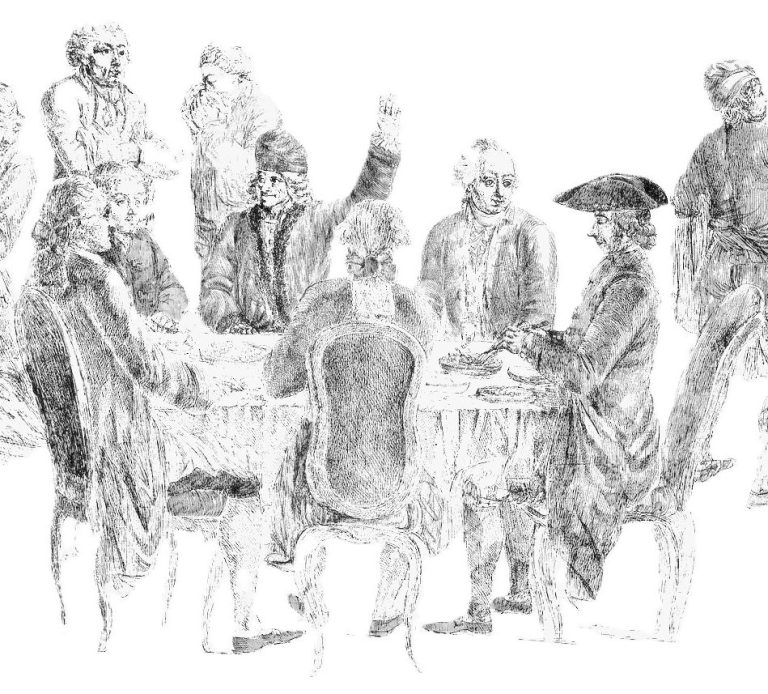
What's going on for you at the moment? How do you see your current juncture?
Widen that lens to your immediate circle, your communities and workplaces; society, the world.
Where is your place, what is your calling?
How have books, reading and other readers - or their absence - played their part in your situation, your stance, your outlook? What connection is there between books/reading and yours and others' ability to respond and act in the world; individually and as part of collectives?
Really the question is whether you can see yourself as actively part of a project, rooted in study in a group/collective context, which culminates in a shared outward facing project - this time round - of putting on a play.