2) The Octagon of Agon
2.1) Lucid Symptoms
Divine, Profane, Surgical, Published: The Performing & non-performing Wombs & Brains of our Doras & Noras
Women were somewhat missing, but where did they fit, how should they feature. Mother-daughter rivalries? As the oppressed - and the exploration of the roots of their oppression? As empowered - mythically, subliminally, materially - in what domain? As writers, activists, educators, healers? The starting point that felt most congruent was along the patient-healer axis, and from there, everything else crept and fought back in. From the Witches, Midwives Nurses, to the Bell Jar and the Yellow Wallpaper, a host of women writers have had a say, alongside a few male allies and some exemplars of provocation and domination. Luce Irigaray was one of the first voices to preponderate, emerging as a complex answer to the question that posed itself when comparing the lot of women in France with their philosophies and that of women in the Anglo-Saxon world with their political sociologies. The latter somewhat poorly represented in the collection of texts: but there's Federici's Caliban and the Witch; and her erstwhile fellow-traveller from the Wages for Housewives era, Selma James.
Whether the woman's role in question is as educators, wives, workers, carers, mothers, activists and healers; whether the input is literary, philosophical or political; whether the women in view are considered active, passive, rebelling or complicit: a central antagonism is present throughout: the female subject and subjectivity is formed by, lives with/under the law of the father. And in among the analysis of material conditions and the strategies to change material reality, there is adamant persistence, an undoubtedly feminist one to go there on the question of specifically female interiority. And to propose a form of writing, fitting to the expression of that: which Cixous encrypts as an écriture féminine.
The questions facing women, their doubts, their strivings are also to be found, centrally, in courses 2,3 & 5.

2.2) I can't get you out of my head / from under my skin. Perch to perch, prop to prop, The Double lives of the haunted ego (in search of the other).
Split off, appropriately enough, from course 3, the question of the Double posed itself. Dostoevsky's case study, Jekyll and Hyde, The Picture of Dorian Gray... Wuthering Heights. What is it that's going on? Does the Double represent a crisis of the self, or is it no more than a tale of the uncanny? In our own searches for the other, it's now a commonplace assertion that we merely find reflections of our self (or do we call it projections, shadows, alter egos?). R.D Laing raises his hand to say, it's a split, a confrontation between our true selves forced into hiding vs the false ones, compliant masks we opted for, insecure in our own existence. Alice Miller might interject: the split in the child is to please the parents. On the question of our peer-peer relations, Melanie Klein's might assert that rivalrous envy is the motive force, the imprint of the siblings, or indeed that guilt binds us to the other, as in Stefan Zweig's Beware of Pity. The big brother that torments us may be a whole continent, as in Kafka's America. Otto Rank, developing the old idea that shadows and reflections were souls, and their loss represented death, describes a primary narcissism, an aspect of which is fear of death; the Double is created as an insurance, a protection from death - an act of love. But if as the person matures, they stay stuck in narcissism, the double comes to represent everything they can't control, becomes malign, an omen of death.
Jean Laplanche, a serious re-interpreter of Freud's work, would turn the spotlight on the process whereby the child creates the boundary of the ego, a stable 'I' as a means of psychic survival: translating, organising, ordering - incorporating - what it can from the barrage of enigmatic messages they receive from the adults (themselves, it should be said, not fully conscious of what they transmit). But it's always an inadequate process, there's always a residue of untranslated, unincorporated but none-the-less messages-experiences, symbolised by castration, a symbol of lack. We're left with this feeling, like a splinter under the skin, and we go forward in life attempting to complete a translation which can never be adequate. The Jungians waited too politely to speak, but they're here too, having 1-2 with as many texts as they can collar, offering to transmute to double into a source of creativity. Artaud lights a fuse.
2.3) The Voices Told me To /Moi, j'accuse - The Contest of the absolute authorities.
A trio of plays: Anouilh's 'Antigone', Osborne's Luther and then Shakespeare's Richard II. Antigone's obstinate fidelity to her moral system comes up against the necessary cruelty of Creon standing in for the state; Osborne's portrayal of Luther as a figure similarly hunted, the intensity of his self-inflicted trials sets the trajectory for his confrontation with the church hierarchy. Both characters eventually obey a higher reason, internalised, but not without inner turmoil that precedes the outward battle. Richard II, facing the fait-accompli of his usurper is more resigned in his defeat, as though once the mirror of his counterparts and the court fails to reflect his Divine sovereignty, he crumbles. "Ay, No; No, Ay". But not entirely. His commitment to the role, his theatricality in refusing to make a public confession, his smashing the mirror, logically, commits him to the prison cell at best, not the retreat to a hermitage he was offered earlier.
The protagonists of the other texts on this course navigate their selfhood set against the potency of the bureaucracy, the psychiatric institution, the courtroom. Whatever the setting, a trial is at stake, and the subject the choice is to perform madness or martyrdom; the trial was convoked from the very moment they would obey the voice in their head.
With analytic rescue from eminent French Freudian Janine Chasseguet-Smirgel on the Ego Ideal (who they feel they must be), Heidegger, Kierkegaard, Alice Miller, Foucault (naturally), Ranciere and others: there's no in camera courtroom. The trial is staged, the plea and the judgement, the audience-public, are together complicit in the agony of the individual.
2.4) "Stop complaining" said the farmer, "who told you a calf to be"? The serious play between the Master and the slave, carousing on carousel
Stories within stories, folies à deux, the head and the belly, the high-flown, the idiom: we begin tonight's entertainment with Gargantua & Pantagruel, Jacques le fataliste, Don Quixote, Tristram Shandy, The Pickwick Papers - in any order. Joyful writers of the picaresque and satirical, Rabelais, Diderot, Cervantes, Sterne and Dickens are wonderful comedians of the human condition. Wit - its recurrence as a word in the first days of my renewed reading journey, undertaken in a period of mourning - these have been the writers, Dickens first, that brought the laughter back out loud. The ingenuity of the repartee, the cleverness in the sudden, and even more in the expected. Doffing their caps to their predecessors, each proffer their distinctive shade of comedic master-servant duo. So, roll up, roll up, come here for that. And stay, if you will, for a foray into the texts that cast servitude in the darker tones we know, the power struggles that bite and claw, where a symbiotic tussle shape-shifts to one of supremacy and subjection. Hegel is here for it, the master-slave section of his Phenomenology of Spirit - and a host of exponents, all varieties of Marxist. Frederic Jameson, Raya Dunayevska. Let's take Hyppolite, whose translation and teaching shaped the '68 generation of Deleuze, Derrida, Foucault and Althusser; he's in dialogue with the Hegel à la Sartre. Hyppolite, with Marx, notes the substantiality of the slave, however alienated they are through their subjection: they have a closeness to the world through their labour which directly transforms it (and them). The master, also alienated, is at home in their world, with power, but they are phantoms in a world built by others. Whereas for Marx, the class struggle issues in a higher state of universal rehumanisation, Hyppolite sees it a staging point (a play within a play, if you like) on the way to the realisation, the "Unhappy Consciousness", that humanity and the divine are separate. A sober version of the defiantly jubilant existentialism in the Marxist rally. Or we can kick work to the kerb altogether and bring in Bakhtin on Rabelais to take us back to carnival, the Beach Beneath the Streets of the Situationist International, or Jacques Ranciere's Proletarian Nights, the Workers' Dream in Nineteenth Century France which "locates the nineteenth-century origins of European socialism not in the noble desire of artisans to control their own labor but in the utopian visions of working-class poets who wanted to be free of labor altogether". Or turn to Jessica Benjamin, the psychoanalyst who shows we can all just get along in mutual recognition. Or Boétie, on Servitude, who say the choice to be a servant is all your, precursor to the anarchist (here represented) or the Tories (not), qui sais?
2.5) Sublimations: Golden Notebooks in the Garden on Gethsemane
Agon - contest, competition, struggle - was a daemon or a minor deity in the Greek world, often linked to Zelos (rivalry) and Nike (victory) - symbolising the necessary human struggle to achieve success. Virtue & excellence - arrete - is achieved through agon, endurance, the active process. The contest is there in role protagonist and antagonist. It becomes a term in intellectual debate, also associated with the courtroom. We can think of the adversary (Satan) who incites God to let him really test Job's piety through a trial of tragedy; or the Devil's Advocate, the official in the Catholic Church who acted like a prosecutor in process of canonisation, trying to find reasons deny a candidate their sainthood; J.S. Mill , 'On Liberty' about our beliefs needing to be subjected to the strongest possible criticism; or Marx to encourage the French working class to wade in the water of Capital:There is no royal road to science, and only those who do not dread the fatiguing climb of its steep paths have a chance of gaining its luminous summits."; and to bring us up to date, Robert Howell, imagining the crippling effect a Google Morals Map that guides right conduct would represent: "Virtue is not a piece of information that can be handed over; it is a way of being that must be achieved." All this to say that there's no material or spiritual bypass to sublimation.
A Freudian term where it's generally taken to represents the redirection of libido, recast by Laplanche, in his lectures on Sublimation as the struggle to retranslate the traumatic energy that hasn't been understood. For Freud, the sexual energy is desexualised and "bound" to a new, cultural object, or work; the sexual nature remains for Laplanche - and keeps its obsessive character - but not as a trauma repeated by a truth represented, in symbolic form. For Jung the battle between the ego and the shadow (the conscious and unconscious) through the mechanism of the "transcendent function" moves us along the process of integration, individuation. Lacan has his axe to grind to on the matter, and he gets to speak in his own book, but our contemporary Jamieson Webster walks us from Freud through Lacan should you wish to eave him on the shelf. And one more thing, we have Christ's Agony in the Garden, but the whole process from entering Jerusalem to the resurrection, and while agony remains as a word in Latin, it maps only onto the death throes, while passio- passive endurance - becomes the catch-all word encompassing the emotions. And in the line up of literary giants - Lessing, Kazantzakis, Woolf, Sackville-West, Murdoch, Duras, Stendhal, Goethe Dostoyevsky, Flaubert, Hesse -you'll see their characters flex, making a direct bid for sublimation. Some fail, some get there or close, if you think that's possible. Adorno didn't. Glorious nonetheless.
2.6) You're Uranus not my rival: The Gays look at the Boy-Man in the Mirror
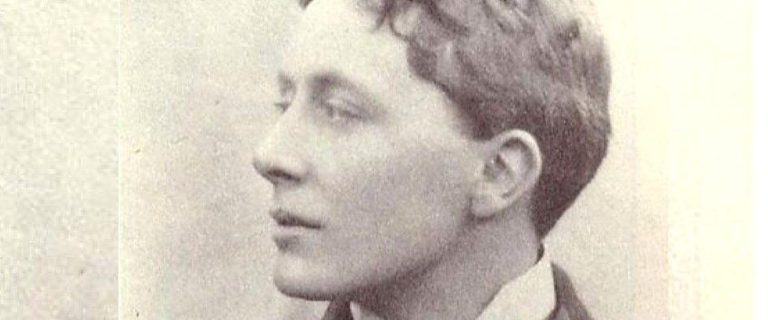
Speaking of bypasses: the mantra of the gays, according to the gospel of our Lady Gaga, is that we're born this way. The Course of Gay and Lesbian Lives: Social and Psychoanalytic Perspectives, while refuting both that there's any biological determination of homosexuality and that developmental factors predetermine it, frames sexual orientation, and its significance, as something that shifts across historical periods and in the course of personal life cycles. They advocate for understanding a person's life story, for psychoanalysis to help rebuild coherence for those who've faced intolerance and hostility. Well, in a long list of books ordered - to nail the question, any and every question - this was the last and it was expensive. The authors may be right, and regardless, it may simply be the pragmatic thing to recognise that the persistent search for an etiology and developmental causes has evidently been connected to pathologisation and stigmatisation, to attempts to reorient gay people according to speculative theories of developmental factors; and that there's every reason to hold their line as a buffer against the damage done to gay people. But I suspect it will leave questions unanswered, if you're question-minded. So, yes, there's a fairly exhaustive list of the heavy-hitters in the mainstream and the gay psychoanalytic field. There's a fair smattering of the ground level dirt and oil of (mainly white) gay men's lives to be found in a selection of novels and plays, with queer literary criticism to help you grope around. Freud, in a passing sardonic remark in one of his lectures dismisses a claim that must have been in the ether in his days that there was something of the special, even the elect connected with homosexuality. A century of experience of basic gays confirms his judgement. Freud, whatever anyone thinks of his suggestions about homosexuality, politically stood against criminalisation, and did more than anyone else to reflect the deviant back at the normative, for us to see family resemblances of any pathology in all of us. And yet there's something attractive in a figure like Marc-André Raffalovich, the wealthy Russian Jew who converted to Catholicism and tore away the beautiful John Gray from Oscar Wilde who Dorian is thought to be based on: Raffalovich's Uranisme et Unisexualité, posits a basic taxonomy of gays, the superior - born inverted but naturally refined, intellectual, capable of directing the sexuality into high art or deep and chaste friendships - and the inferior, basically naturally debauched. Ok, let's perhaps not take that as gospel but do we claim the Proust, Tchaikovsky, Forster, the Genet & the Baldwin to be just incidentally gay, or whose poetic genius was in some part forged by oppression, or do we see their homosexuality as causal, necessary, even without ever being able to isolate it as a factor then, no more than we really can now, from their fraught social existence as gay. Is this too long in the mirror, in the bathroom? Michael Jackson - was Peter Pan gay? Let's what von Franz in Puer Aeternus, A Psychological Study of the Adult Struggle with the Paradise of Childhood would say. No issue with daddy issues? Let a thousand fetishes bloom, sure but this arena is for those who want to enter the fray for the sweat of the wrestle.
7.2) Friends: J.M. Coetzee & Paul Auster
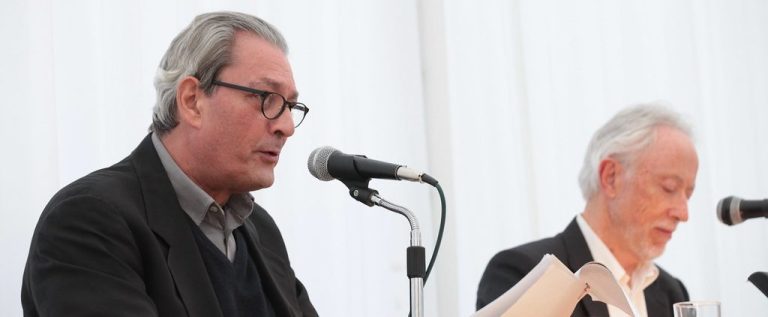
The Music of Chance, I read it over a few successive stops on a bench adjacent to a small church with a pretty bell tower in the scorching in the late morning sun. It was Mareuil, printemps 2024 - two years ago when the momentum of synchronicities announced it was back, in books as is my synchronicity's wont, but more clinically in recurrent words - in English and in French, a hall of mirrors in ambush on the page. I was also, more laboriously, trying to make my way through Monod - Le Le hasard et la nécessité - found on the public lending shelves in the village at the same time. And when the almost alien perfection of Couperin's Les barricades mystérieuses appeared in Auster's book, like a looming, commanding - true -puppeteer, it was like I had known- what exactly, I think I forgot as soon as I'd had the thought. The whole book felt like that in a way, the scripting of inevitability in the guise of chance. I lent it to the optician, I took it back before I left. I had a friend who rated 'The New York Trilogy' but had not read anything by him before. I knew he had some French connection. Coetzee was for dusk, the last half hour, sometimes not even that long, in a spot where the sun set across fields a little off from the village square, fields that backed onto South African veldts. Each section, numbered like chapters in a bible or points in a list of theses, was as worked as a painting, like being whacked with a rock-filled sack by a hilarious, cunning assailant who knew everything, like Freud but as thick as an oil spill. Two books out of a marathon of 26 I read in those 10 weeks in Mareuil, I was happy to have two new people with a long list of contemporary works I could get through like a teenage reader. So, I just collected them up from the charity shops on return, and one day, quite at the beginning of the slots being taken for these courses, with a novel each of theirs on the go (Coetzee having the same maestro effect in the Master of St Petersburg) I thought to look up the two together and see perchance if there was a link. I found Here and Now. They wrote to each other, we friends, maybe they had a gentle rivalry going on, they were men and writers after all. I ordered 6 copies online - at that stage, I was still mainly acquiring on the basis of finds on my rounds but figured I'd not seen this book before so - and I gathered together the stock of their texts that I had in already, not a few. And the next morning, at the edge of my bed, I had an image of myself in the St John's Wood's Oxfam; I almost missed it, for some reason stowed in among the play section, a different edition of Here and Now, the confirmation I was seeking. And so here we are. You can read wikipedia entries on them for yourself, and maybe you're way ahead of me with these writers already.. They both studied English Literature, both worked on translations. Coetzee's biography does not disappoint in the scheme of this course - I've seen a book on him where he's cast as a public intellectual of our times. They're both activists in their way. Auster's 4-3-2-1 a critic describes as "a mesmerizing dramatization of the multitude of clashing selves we each harbor within"; a critic says of Coetzee's work that he "seems to be taking less interest in the storytelling keel of his books and is inviting us instead to listen in to an intimate conversation he is having with himself, in the form of multiple alter egos", that his characters are somewhat harsh on him. Coetzee is clearly the more heavy-weight, intellectually, in accolades, in heft of the cultural themes he takes up, he's also still alive. But in the formative story Auster gives of himself - witnessing a boy being struck dead by lighting a few inches away from him at a summer camp at the age of 14, that sense of the quick malignance of life always in the wings energises his work, and I found out today he was Jewish. The opening letters of Here and Now are, felicitously, an exchange about friendship, they adopt a cordial formal tone with each other, a container for some geeky enthusiastic exchanges of their library pickings, their musings. You get the feeling that Coetzee lets Auster set the tone and he matches it out of bonhomie. Anyway, so this is the option for those who just want to read lots of novels by two particular authors and get to know their world, uncrowded by lit crit and high theory.* I am hoping for the sake of completeness that their work will tick the remaining boxes of this Octagon of Agon - murder, mystery, inheritance etc... I've just found out that the Olympics were called Olympiakoi Agōnes, via a google search to find out how-whether strife and agon are connected. They very much are. Eris. There's a new book on it: Conflict and Competition: Agon in Western Greece: "The agōn deemed characteristic of ancient Greek culture has roots in the eris (strife) illustrated in Homer and Hesiod and debated in the metaphysics of Heraclitus and Empedocles". Nietzsche wrote on it: Homer's Contest. Maybe J.M and Paul chat about it, I wouldn't be surprised.
*I am throwing in a couple of homeless books on Poland, that are among the last handful to be assigned but I couldn't bring myself to ditch; for Coetzee and his valid preoccupation with the Pole. Thank god, it's better to break the cordon on this section than to go with the temptation to take a few books on Poland as the basis to build a whole collection.... oh, there's the book on Polish Jewish philosophy

2.8) The Battle Royale: No More F***ing Waiting for Godot: The Senior Common Room pile-on concerning the Discovery of Heaven
This, the sublimation garden, mapped onto the political sphere, unto infinity and beyond is where the men, broadly speaking, broadly speak. It started with me looking up 'The Discovery of Heaven' by Harry Muslich. I got something like this: a complex "novel of ideas" that blends philosophy, history, and theology. I recognised it immediately as emblematic of a whole squadron of such books I've accumulated with every intention of reading to get to the bottom of life, the universe and everything. But I've mainly dipped my toes in. We know the people who read such books. Let me take that back or qualify it. I want to read those books without being one of those people. And I had a lot of them. Apart from a couple of texts that felt, in the process, as being missing piece - welcome prompts from AI - Paul Ricoeur, namely who I'd never heard of before but seems a worthy giant - the reading list here consists of books that have survived many a cull for their appearance of importance. I did purchase Iris Murdoch's 'The Sovereignty of Good' for gender balance, but it's a very slim volume. The stakes in the fight pit the Freuds against the Jungs, the Dawkinites against the Sheldrakes. I'm obviously biased and the list reflects that, but it's also fair to say that the representatives I've gathered are on the back foot, you can't help but be aware of their opponent, they don't have the prerogative of speaking in their own terms, solely. Koestler, as a figure, a biography, seems the King David, shepherd boy with a slingshot with a mission. It's effectively the mainly 20th century resumption of hostilities from the eighteenth century, where science was enthroned for a full century but the religious, the mystics, the poets that popped up to tail end the 1700s with their Romantic reaction, come back with a more serious strategy. It's the fallout of the disillusion of both the American and Russian projects - the first and second worlds in seeming opposition but united in their materialism. It's the reclamation of the soul, with less fence-sitting but more conscious and high-minded ambiguity. Looking back to course 7, this snippet from a review of Here and Now captures the gloves on version of the dispute: "In his ongoing obsession with the loops and whorls of coincidence, Auster wonders at one point about the fact that in the course of a few days, at Cannes, where he is a judge on the Prize jury, and then in Chicago at a book event, and in a New York hotel where he is waiting to take Juliette Binoche out to lunch, he has happened to bump into Charlton Heston. "What am I to make of this, John? Do things like this happen to you, or am I the only one?"
Coetzee puts the Heston encounters down to the fact that Auster works in the film business before moving on to other concerns, including a review he is writing of the collected letters of Samuel Beckett, a shared hero."
There's the pessimism of Ernest Becker in The Birth and Death of Meaning that sees our efforts to find meaning to be no more than a psychological defence mechanism against the reality of death; he finds more than an echo in Freud's Civilization and its Discontents. On the other side there's the host of writers that see the very purpose of life to be the creative search for meaning. Or the Camus-type variation that sits somewhere between which rejects that there is any intrinsic purpose or meaning but still advocates we put our shoulders to the wheel and relish the glimmers. Lenin polemicising against my Russian Revolutionary hero Lunacharsky, the commissar of Narkompros (Enlightenment), the department of education and arts. There's the bizarre example of Jacques Monod amassing all his knowledge of evolution at a cellular level in the service of a thoroughgoing materialism but where the evidence seems to speak against him, and he separately concludes that man has a meaning-making need that might always have to be catered for by a form of religion, so better that it be a socialistic one. There's the various blueprints for social organisation, where the battle over human nature naturally collides in the visions and measures. Is the ideal society trying to placate, to control, to reign in, or is to liberate, to realise. I think it's a fair characterisation of these texts to say that they pick up the threads we've seen in the foundation courses, and throughout the Octagon; they want the synthesis, the final frontier to be settled, to round off the long night with the final word on the way of the world, the right to the parting shot.