3) articulations, applications
3.1) The Theatre, Body, Semiotics & Language
Where will our bodies last be required? In the theatre, surely, with voices that must live anew everyday, with gesture: constantly resourcing language. The clumping together of these four aspects of the library has made a virtue of (an admittedly self-imposed restrictive) necessity. On the shelves together we have Kristeva, student of Lacan finding herself more aligned with Laplanche. Her chora, where the semiotic drives reside: the pulsions as primal as bodily urges; repetitions, rhythm, babble, assonance, silence; pre-linguistic, still-symbiotic with the maternal body; they organise in readiness for the symbolic order: language, grammar, the means of communication within the social law - the name of the father. The semiotic persists, it is there below the surface of the text, Kristeva calls it the genotext: the Tyger Tyger, burning bright ready to erupt the logical surface. To this the poets most closely adhere. Plato's cave seems more like the womb than the outside, but the figures crouched within, fixed on the moving shadows on the wall, intangible figments of reality, prefigures the screen. See what Sontag, Berger, Barthes say about that staging post from theatre to film, the camera and the image. The theatre is both the darkness and the light, the dream and the waking, the real body as fantasy, as fetish. Our bodies themselves speak; gesture yes, but as Boal, Lecoq will show, they communicate our habits and customs, our daily exertions, the shape of our character. In front of the audience, does the language of the body get its due attention. The body in its ritual not its frozen form. Bodies. It's the heart of a living polis throbbing, where language is its most persuasive, deliberate, communal. Approach with the ardour of Artaud; the applicant anthropologist will not be accepted.
3.2) On The Future of Our Educational Establishments and Restoring Our Reasons to Meet.
(Or The unrequited love of adult education and grinding your axes with kindness)
Friends, Romanesque educators: gis a job. Joking not joking: half othe books here assembled have been laid off, in the cull in adult education, unless they retrained to teach hairdressing and ESOL Entry 1. Let their drum keep banging against the doors of the Learning and Work Institutes of the world from which they were banished for claiming and reclaiming the right to lifelong adult community education in the humanities. Celebrate what they managed to implement, the horizons they envisioned. See their demise as intrinsically connected to the "next they came for me" Ivory Towers. The promise of higher education for the masses lasted, what, 10 years? From the Workers Educational Association to the initial educational dreams from the Soviets, re-read, react!
But now, more than ever, with learning having been so stringently associated with individual merit for individual beggar your neighbour gain - students at my college would steal the duplicate copies of the required reading texts from the library to hobble their friends, would sit silent in seminars and tutorials cravenly guarding their ideas - how do we make learning a social good (again) and how do we make social learning good?
The other half of these books take advice from the group therapist (quel surprise!) and the social worker, from the Quaker, the Corporate, the Queer. Not in a book (quelle tragedie!), here's an article I wrote on the issue (in an activist ESOL setting but with general concern). In a world where debate spells polarisation, ridicule, knee-jerk contention, turfwar or indeed TERF war - and critical thinking is dubbed Marxist, and Marx alone knows what that means.... I'll get off the soapbox, in the spirit of not making an audience of the group. Hard not to rant! Let me finish by saying that group belonging has evidence-based health benefits, it's a precious thing. One might imagine that's less the case for keyboard warriorism, YouTube commentary and shouting at your phone. Take a look at the article, it's thoughtful and temperate :)
3.3) Race, Nation, Religion, Empire
The hills we die on, prisons of belonging:
Jewish People - Black History - The Balkans - The Middle East & Islam
It's easier to start by explaining how I came by the books on the list for this course. I started a library on the Isle of Wight, and next in at the Brent Trades & Labour Hall, both largely through making an intervention with a local Oxfam shop to stop unconscionable bag-loads of good books going to be pulped every week. In Highgate in 2013 it was some 2,000 which I'd sort through on a Tuesday and Thursday for a couple of years, carrying a traveller’s backpack plus two full bags-for-life on two buses back to Dollis Hill. Highgate being a rich area, with lots of Jewish people, without even anticipating much of a readership for the books I saved a whole load, many on psychoanalysis (mostly now lost).
A few doors down from the Trades Hall was a Black barber shop; he too kept a shelf of Black History books, part of a strong and longstanding local emphasis on self-education in the Black community, which used to be reflected on the shelves of the public libraries and in schools—in decline as part of the general decline. So the books for that section I largely accumulated cheaply, though I'd also go from time to time to a second-hand black bookshop in Hackney on Clarence Road, there no longer; and the easy pickings are no longer the same. It used to be the case that there was a wide social readership for Black History well beyond the community and the Left, thanks to a politics that took hold for a generation or two. For all non-white people in Europe, the Black American story was in some sense the benchmark story. Out to Hendon, Golders Green and Edgware of course there are a lot of charity shops, lots of books by Jewish writers, still. It goes without saying that it's broadly a community that reads, and in this part of London, with space for books.
The books on the Balkans are because I went to Sarajevo in 2016 for six weeks; they used to call it the Jerusalem of Europe. It was among the "ethnic conflicts" that were useful comparative case studies for me, of Tamil descent, alongside Ireland, Palestine. It's also just more interesting to me, the history and political geography of the region, the achievements of Yugoslavia, the shame of weaponised nationalism—in that case among people who speak the same language.
The Middle East, well it's the political football match par excellence in the West, it's the continuation of Empire and Anti-Semitism by other means. Look at the carnivals of performed empathy for the Palestinians, the pleasure of the pretence that there's a conspiracy at work to silence all criticism of Israel as anti-semitic; I don't deny there's a level of unscrupulous weaponisation of anti-semitism against opponents, but it's also patently possible to speak concretely, without dog-whistle and hushed whispers of what it is you oppose, and perchance to be opposed to those human rights abuses when they happen outside of Gaza. Anyway, much as Israel-Palestine is fascinating from any of the perspectives from the foundations of this programme, it's not the only story for the Jewish people, for the Middle East and for Islam. Half the books in that section were mine, the larger half rescued from the flat of a deceased comrade in Barnet, George Shaw, much more unequivocally Palestinian partisan, also a gentle, cultured guy, a Marxist humanist (the Raya Dunayevskaya books dotted around the Octagon are his).
Whichever of the four lists your group focuses on—that's something to be decided on together—you'll have your own approaches to the books on the list, including ones you'll want to add, maybe ones you might prefer were not there. It's precisely the reason for study groups: to take a step back, to step out of your shoes, to read with no particular skin in the game, for a while in any case. My favourite Fanon quote, which famously closes Black Skins, White Masks: “O my body, make of me always a man who questions!”
3.4) The Library in all its forgotten, unknown, and possible glory
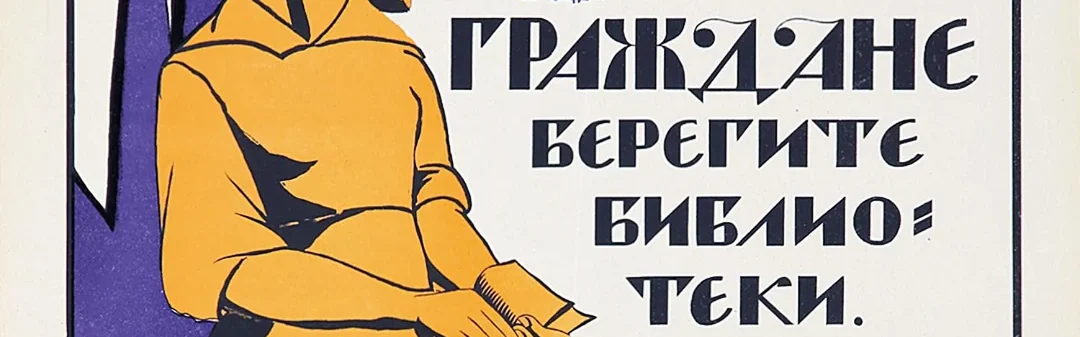
It's the twin peak of this project with the Theatre. Where would you or I be without the library? In this government declared Year of Reading, one of its aims is that there be a library in every primary school by 2029. Astonishing to find out there isn't. For me, it was a room along the front facade of the school, with the nurses room adjoining. Alongside stories, it contained the biographies of Marie Curie, Father Damian, MLK etc. It was a time of SATS boycott where teachers had autonomy and granted it to us, so the library was a resource for the open-ended half-term long classroom projects we were set. Now, with activity timed by the minute, with set extension activities, it's hard to imagine that earnt free time when you could slope off there. And the local libraries were nice. They still often are for the children to be fair. But the opening hours have been cut, shelf space reduced, half my borough's libraries handed over to be run and funded by volunteers - and let's be frank: the reason they're not all shut yet is for four reasons: the kids space, as mentioned; n defence of a warm non-monetised space for those in need with computers, and for pretence and nostalgia, for independent study space. The books are almost incidental. They arrive and they leave according to contracts with booksellers/publishers according to formulas. There probably isn't one qualified librarian in the council service. At the universities, the humanities departments and languages departments topple, several a year at the moment, with relentless marketisation, tuition fees and debt, and the absence of social mission. Libraries, in any case, are calculating the cost per unit of keeping a physical book in situ, and are in hock to the e-book drive, even though it's now widely understood that reading on the screen is an inferior experience to reading on the page; that the digital books don't actually belong to them, and their access has to be renewed. With the get-their-money and churn-them-out degree system, with minimum staffing resource, with the decline in independent learning skills which runs back through the whole system, with the text book cartel - what is the need for an extensive library. Go buy some stuff on anybook.com and you'll have for yourself some of the bounty of the cull. There are a few hundred books in this collection, often brand new, discarded from our universities.
So, there you have the doom-mongering. Let's go to the booklist. It's a modest orientation of different facets of libraries, the book industry and reading, with the usual spread of genre. Yes, even the psychoanalytic, and I'd hope the Marxist. Imagine reading the holy book on a kindle. There's the phenomenon of the literary salons, the curious role public libraries seemed to have taken at one point in America of supporting literature reading programmes. There's the important angle of the private library: The Utopia Workshop Library, much like the libraries I've been tasked to save of dead comrades - or the Helene Cixous archive bequest that Jacques Derrida talks about in his book: is there another form of public library that is more personal, taking the logic of the individual reader request (do those budgets even still exist) and dialling it up to community readership curation? Down with the Dewey Decimal System I say - up with the logic of the maze of the ramshackle bookshop.
The Ryde Bookshop on the Isle of Wight, a huge three storey house was an adventure in a deeply rooted archive of the reading interests of the people. There was one A. Henderson, whose books I had an eye for, a kindred intellectual spirit: I could put my finger on his former books among the tens of thousands with magnetic ease. It's to him, and that bookshop that I (we) can thank for me finding Utopian Thought in the Western World, to read it fourteen years later!
I didn't take advantage of the libraries when I was at university: my time was divided between the activist street, the rehearsal room and stage; the bar and common room. Is that not how youth should be spent? I only went into the Bodleian Library twice - once for matriculation, once to occupy it overnight to protest fees. In that city, those few miles in circumference, there were the faculty libraries and the 30+ college libraries; at Somerville, all students had a key to access it 24 hours - that I did actually do - and I will never forget its importance, in practice, as principle. All Power to the libraries, comrades!

3.5) Here's Where the Magic Happens: Lean in to the woo:
The Royal Roads of the Tarot, Astrology, Kabbalah, Dreams
Were you expecting this ? You must have seen it was on the cards. For the scientific materialist, it's only scientific to try, for the credulous fill your boots.
I think I'll approach this with anecdote once more, because how can you prove objectively what is understood intuitively, non-rationally, something which isn't subject to on demand repeatable experiment. I've tried this conversation in many forms, and I think the best ways in to the logic of illogic is often two questions: Do you believe in luck? Have you ever felt that certain coincidences were meaningful, and demanded explanation? There is also he question of personal destiny, which I think many harbour a belief in, and thus warrants some investigation.
This is the course where Jung comes into its own, but also arguably, the most useful of resources for literary understanding not just criticism.
It was in Marseille that I found a book on the Tarot named after that port city on the mediterranean. I'd stayed on at an airbnb weeks longer than anticipated. I stumbled on a house with a library, and sweeping one morning the book caught me eye. I only picked it up because I found it funny: the Marseillais are a very chauvinistic tribe, the best football, rap, sun etc, it amused me that they even had their own tarot. But as I read through it - the feeling was so familiar, page after page of symbols that felt like a dictionary of life, the key words of story. The Empress, the Hermit, the Hanged Man, the Moon, my favourites then and now. The Devil, Death (or in the Marseille, the card with no name), The Tower. The Star. The Wheel of Fortune. Go down that road and you'll see it everywhere in culture catching the imagination, from Andre Breton to Stephen King. Some even try to pin it on Freud - who did in any case spend his Saturday nights religiously playing the secular card game version with friends, still popular in certain parts of Europe. The story of its transmission appealed to me, the gypsy in this case rather than the wandering Jew. It's too detailed a story to tell her about the very precise coincidence that blew my mind in that book ,but suffice it to say that it issued in me getting tattoos of the Hermit and the Moon on my arms (I'm not a tattoo fan, and certainly don't have the arms for it). I loved the fact of the 1-1 conversations that the cards opened up, like the confessional or the couch, people speak back to the prompts from the cards and there's the added feeling, inseparable from it, of the right time.
As for astrology - for me it's worth considering any form of cultural practice that could spring up in recognisably similar forms in such far-flung zones of civilisation independently: China, India, Egypt: the division of the skies, the characterisation of the planets, the total scope of the themes at play in the signs and in the houses. Like organising a library, the appetite for meaningful taxonomy. I know nothing about the Kabbalah, but Madonna and the vapid "deep" and mystical types notwithstanding - whom I also find a bit repellent, the idea that the letter of an alphabet could be more than mere ciphers appeals, if not enough to believe but to have a brief foray. And dream, an 11th hour addition, I don't know how I hadn't thought of it, other than a book or two in the Freud section, and dotted around. I have the most astonishing dreams - it's hard to believe that such creativity resides in me, such narrative power, and the ability to summon the precise cast member, from my life, from TV, totally novel, to step onto the stage. I've never been able to write fiction in my waking hours, so how do "I" manage that. So, with the Surrealists inevitably brought to mind, and Jung and von Franz having waited wryly for this moment, I went on a (sort of) last spree shopping. It's all in all one of the best collections of the library, and through my own peregrinations along the Mediterranean coast, I picked up a good range of decks you're welcome to try out.
It was that summer that Aylan Kurdi washed ashore, the image that turned a set of mounting numbers in the graveyard into human tragedy. I remember drawing a set of cards that were unambiguously about social disorder; having arrived back in Marseille aiming to stay again for a while, I instead moved straight on up to Calais: that piece of water that divides two nations, two languages, the fact of which means no one is responsible. If I hadn't gone to Calais then, I wouldn't have met the Sudanese friend who a year later happened to find himself living a mile away from me in London, which got me into teaching the third conditional for five years to migrant workers and refugees. The world is a strange place, and that's fine if you want to leave it at that, but as with any other set of tools that humanity has developed to navigate life, I think the ones here are worth exploring. We live amidst their languages in any case, it seems to me a question of whether we choose to hear and learn to speak.
3.6) The Mousetrap
The tragedy within comedy and vice versa
The thing about spending your time reading plays is that you can take the interior conjuring you do with characters, voices etc with fiction too, but decide to make it happen, to stage it. So here, at your leisure are a collection of plays, including the ones I'm projecting that we put on: Henry IV or Measure for Measure; any of the Phaedres or the Antigones; The Marriage of Figaro. Why? Just because. And you're free to push back on that. You could, if you want, take a look at some of the theory, of comedy, of tragedy and their adjacent modes, the surreal, the absurd, and map them all out.
It's the bête noire of the Cambridge English Literature course, the compulsory paper on Tragedy. Three hours, three questions. When my time came, I was already finding life somewhat unbearably absurd, so I wrote one answer for three hours on Hamlet. My parents didn't find it funny. My senior tutor offered to claim some dispensation; the word he used was "unravelled". It was certainly the moment where my life radically changed course, the jury's still out on whether I lost the plot or claimed authorship. It's such case studies, in every possible packaging of scenario, that we find, ready, in these texts to put on stage; for the audience to bring to bear their full range of responses; their judgement, their empathy, the complicité.
As to comedy, Chaplin: "Life is a tragedy when seen in close-up, but a comedy in long-shot." This was the reminder Dickens gave me, and Cervantes, that you can choose laughter, and still shed the most poignant and sincere of tears at the end. Even Hamlet is a barrel of laughs if you adopt a way of seeing, and the text absolutely permits it. Job in his lamentation, in retort to the sanctimony of his supposed friends: "No doubt but ye are the people, and wisdom shall die with you." Human wit is the ultimate defiance when being dragged down by the fates. There’s the darkly humorous irony in knowing that Horatio’s report of events will deny the events their due meaning.
But what's left to say after lines like these in Macbeth that devastate us all, irrespective of the particular smallness of our lives or ambitions:
Tomorrow, and tomorrow, and tomorrow,
Creeps in this petty pace from day to day
To the last syllable of recorded time,
And all our yesterdays have lighted fools
The way to dusty death. Out, out, brief candle!
Life's but a walking shadow, a poor player
That struts and frets his hour upon the stage
And then is heard no more: it is a tale
Told by an idiot, full of sound and fury,
Signifying nothing.
Because for the most part we do live to see another day, and the requirement to act does not let up, nor does the struggle to signify something abate. The janus-faced stage, for that reason - with the immediacy of agitation that it can elicit on a good day with a good play - has often been subject to bans. Yes the morality card is played, and dry philosophical complaints. I think it’s more like they say about elections, that if it changed anything they'd abolish them; and thus the theatre remains perfectly untouched in our day. We go to be bored, as cultural currency, we don't even stay after in the bar.
“Human kind cannot bear very much reality”, said Eliot. To twist its meaning a bit, for the sake of silence and a Brechtian "bed for the night"; to give it a Marxist twist: Humankind cannot bear very much diagnosis. Unless it's going to change anything, may as well let be.
24 copies of Montserrat by Roblès to handle before producing our play(s)